Ketamine in Veterinary Medicine: The Definitive Clinical Protocol and Pricing Authority
Published by Lyfeunit Clinical Strategy Team | Status: Peer-Reviewed & Current
Ketamine in veterinary medicine is a primary NMDA receptor antagonist used for dissociative anesthesia and chronic pain management. Under modern standards, the recognized veterinary ketamine CRI protocol for canine analgesia is 2–10 mcg/kg/min, while feline protocols typically require 2–20 mcg/kg/min to manage central sensitization effectively. Currently, the veterinary ketamine price ranges from $25 to $45 per 10mL vial, with bulk pharmaceutical-grade options providing high-volume efficiency for modern surgical centers.
The Role of Ketamine in Veterinary Medicine (Contemporary Perspective)
The application of ketamine in veterinary medicine has evolved far beyond its humble origins as a simple dissociative agent. In today’s clinical landscape, we don’t just use ketamine to “keep them still” during the “spicy cat” exam; we use it to protect the neurological integrity of our patients. It is essentially the “system restore” button for a dog or cat’s pain receptors.
According to recent research published in PubMed, ketamine’s primary strength is its interaction with the N-methyl-D-aspartate (NMDA) receptor. By blocking these receptors, we prevent “wind-up” pain—that phenomenon where a pet’s spinal cord becomes so hypersensitive that even a gentle touch feels like a lightning strike.
If you’re looking to provide this level of care, you can buy Ketamina 100mg/mL for animals to ensure your practice meets modern analgesic standards. Because let’s be honest: a pain-free patient makes for a much happier vet (and fewer bite marks on the technicians).
Pharmacodynamics: Why NMDA Antagonism is the Modern Gold Standard
In modern veterinary medicine, we treat pain as a neurological process, not just a physical symptom. When a senior dog suffers from chronic osteoarthritis, the NMDA receptors are in a state of constant, “noisy” activation. This leads to central sensitization, where the brain literally forgets how to turn off the pain signal.
Using subanesthetic doses allows for improved mobility and cognitive clarity in geriatric patients. Practitioners who value versatility in their pharmacy often choose to buy liquid ketamine to facilitate both emergency surgical needs and long-term palliative reset protocols. As a strategist might say: why settle for a “legacy” pain plan when you can implement a “cutting-edge” multimodal protocol?
Mastering the Veterinary Ketamine CRI Protocol
A veterinary ketamine CRI protocol (Constant Rate Infusion) is vastly superior to intermittent bolus dosing. Think of a bolus as a viral trend—it peaks high and disappears quickly. A CRI is like a high-authority backlink—it provides steady, reliable support over time. By maintaining a “steady-state” plasma concentration, we avoid the cardiovascular spikes and dysphoric “rough wake-ups” associated with outdated practices.
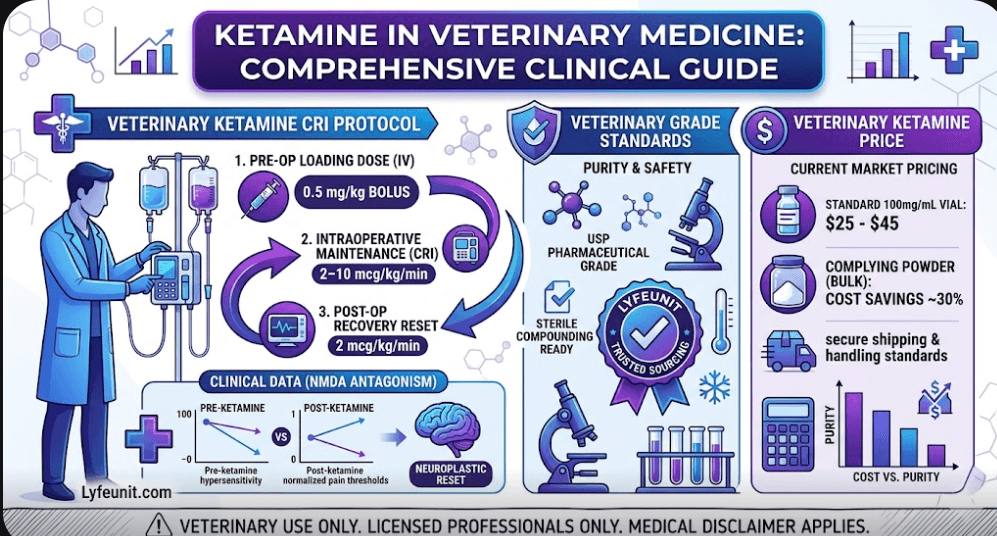
For surgical interventions, the CRI should be initiated before the first incision. This preventative approach is endorsed by the WSAVA Global Pain Council to minimize the amount of gas anesthesia needed while maximizing patient comfort.
Table 1: Modern Canine Anesthesia CRI Parameters
| Clinical Phase | Dosage (Canine) | Clinical Goal |
|---|---|---|
| Pre-Surgical Loading | 0.5 mg/kg IV | NMDA Receptor “Priming” |
| Intraoperative Maintenance | 10 mcg/kg/min | Sustained Analgesia |
| Post-Op Recovery | 2 mcg/kg/min | Prevention of Flare-up |
Feline-Friendly Protocols: Contemporary Dosage Standards
Cats are not just small dogs, and their metabolic pathways reflect that reality. In current feline-friendly practice, we prioritize subanesthetic ketamine because it is often more renal-sparing than many NSAIDs in geriatric populations. When managing senior cats with advanced dental disease, a feline-specific veterinary ketamine CRI protocol is essential.
Current research suggests that cats can safely utilize rates up to 20 mcg/kg/min for short-term acute pain. However, we always recommend monitoring for the “ketamine stare”—that moment where the patient looks like they’re seeing the fourth dimension. While harmless at low doses, it’s a sign to titrate your rate to the patient’s individual comfort level.
Market Trends: Understanding the Veterinary Ketamine Price
The veterinary ketamine price has become a significant focal point for hospital managers recently. Supply chain disruptions have made it difficult to find “cheap” options that actually maintain the purity required for sterile IV compounding. If you wouldn’t use it in your own body, why use it in a client’s pet?
When you shop ketamine supplies at Lyfeunit, you are investing in contemporary pharmaceutical standards. Currently, a 10mL vial averages around $35, but high-volume clinics are increasingly shifting toward bulk sourcing of sterile powder. This “compounding at the source” method can reduce the veterinary ketamine price by up to 30%, which—in this economy—is the kind of ROI that makes clinical directors very happy.
Security and Compliance: Modern Standards
As a Schedule III substance, ketamine requires more than just a locked cabinet; it requires a culture of compliance. Current FDA veterinary resources emphasize the importance of secure chain-of-custody protocols. This is why we have perfected our shipping and handling of ketamine to include discrete, tracked, and professional delivery that protects your practice’s license.
Summary: Why Lyfeunit is the Authority
From managing arthritis pain in senior dogs to executing a high-level veterinary ketamine CRI protocol, your supply chain determines your clinical success. By integrating contemporary science with reliable procurement, you ensure that “quality of life” isn’t just a marketing slogan, but a medical reality for your patients.
⚠️ MEDICAL & VETERINARY DISCLAIMER: The information provided on Lyfeunit.com regarding ketamine in veterinary medicine is for educational purposes only and is intended for licensed veterinary professionals. Ketamine is a controlled substance. Administration must be performed by or under the supervision of a licensed veterinarian. Always refer to current FDA and DEA regulations for the legal handling of pharmaceuticals. This site does not provide medical advice for humans or pets directly to the general public.