When exploring transformative mental health treatments, one critical question stands out: how long does ketamine neuroplasticity last? It is well established that ketamine offers rapid, profound relief for individuals navigating treatment-resistant depression, anxiety, and chronic stress. However, patients and clinicians alike want to understand the long-term durability of these physical structural shifts.
At About Us at LyfeUnit, our mission is to decode the intersection of clinical neuroscience and actionable wellness strategies. We believe that understanding the physiological lifespan of your healing journey empowers you to maximize every single therapeutic investment.
To truly comprehend the lifetime of these neural modifications, we must look past the immediate post-treatment glow. We have to dive straight into the deep architecture of the human brain, analyzing the delicate balance between structural growth and natural cellular decay.
When mapping out a treatment plan, understanding exactly how long does ketamine neuroplasticity last allows patients to schedule behavioral interventions with absolute precision. Many individuals mistake the rapid clearance of the medicine from the bloodstream for the end of its therapeutic effects. In reality, the elimination half-life of the compound is brief, but the structural transformations left in its wake tell a completely different story.
The molecule acts primarily as a biological catalyst, setting off a cascade of cellular changes that persist long after the drug has left your system. This structural shift provides a baseline of relief that can be leveraged for deep personal transformation.
The Macro-Timeline: How Long Does Ketamine Neuroplasticity Last?
To grasp the complete ketamine neuroplasticity timeline, we have to look past the initial treatment phases. Many resources emphasize the immediate biochemical effects, but the real structural changes unfold over a much broader, highly predictable calendar framework.
To determine how long does ketamine neuroplasticity last in a clinical setting, researchers track the physical adaptations of cortical neurons. Neurological research reveals that a single subanesthetic dose triggers an immediate cascade of growth factors. This cascade prompts the brain to synthesize new proteins and sprout fresh dendritic spines within hours.
This structural growth is what allows brain cells to communicate more efficiently along entirely new pathways. However, this heightened structural adaptability does not remain elevated indefinitely. Clinical imaging studies show that without conscious, deliberate reinforcement, these new physical connections naturally begin to recede.
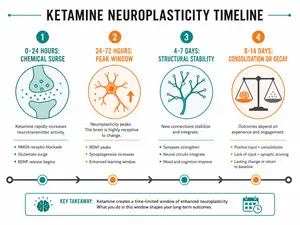
The Structural Macro-Timeline Breakdown:
- Hours 1–24: Rapid chemical surge, glutamate release, and immediate initialization of protein synthesis.
- Hours 24–72: The absolute peak window of systemic hyper-plasticity and profound contextual flexibility.
- Days 4–7: Transitional structural stability where new dendritic connections remain highly accessible but begin seeking behavioral reinforcement.
- Days 8–14: The natural deceleration phase where unreinforced pathways face systemic biological stabilization or elimination.
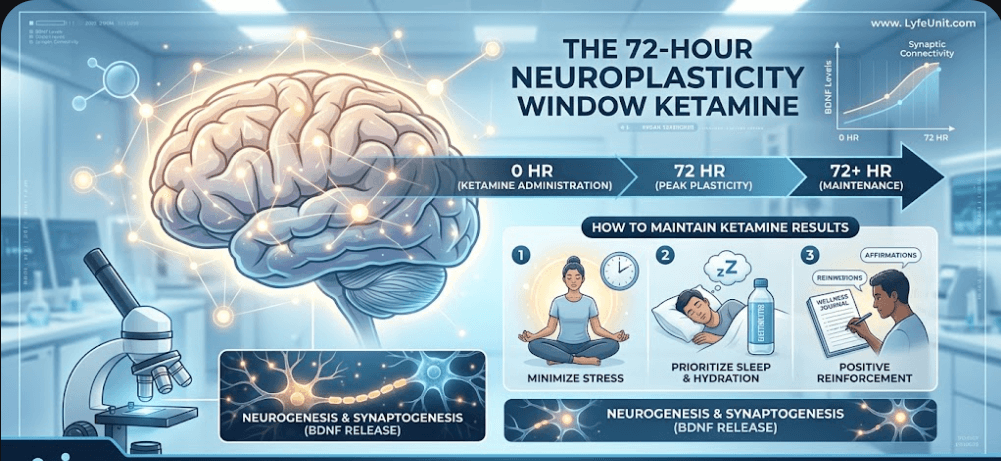
During the critical initial phase, your brain enters what science terms an acute hyper-plastic state. This specific biological window is characterized by a massive surge in Brain-Derived Neurotrophic Factor (BDNF). It also features the rapid activation of the mammalian target of rapamycin (mTOR) pathway, a core engine of cellular growth.
To read a thorough exploration of this immediate, high-impact phase, view our detailed guide on the 72-hour neuroplasticity window. This specific timeframe represents your greatest asset for introducing radical changes to deep-seated cognitive patterns.
But what actually happens once those initial three days pass? Understanding how long does ketamine neuroplasticity last requires examining the downstream timeline. Between days four and fourteen, the systemic chemical surge completely dissipates, leaving behind fresh, delicate neural architecture that must be manually sustained.
During days four through seven, the brain remains uniquely receptive to environmental input, though the spontaneous generation of new synapses slows down. This is the period where structural changes hang in the balance, waiting for real-world validation. The brain evaluates these fresh connections based on utility, measuring whether they are actively contributing to your daily cognitive and emotional baseline.
As you progress into the second week, the window begins to narrow. The newly sprouted dendritic spines, which initially appear as fragile, thin projections, require specific electrical stimulation to mature into stable, mushroom-shaped structures. Without this stabilizing input, the structural architecture slowly destabilizes, returning the brain to its pre-treatment configuration by day fourteen.
Synaptic Pruning and How Long Does Ketamine Neuroplasticity Last
To understand why these fresh neural connections begin to fade, we have to explore the concept of the synaptic pruning decay rate. The human brain is a highly efficient, energy-consuming organ that operates on a strict policy of systemic resource conservation.
When ketamine stimulates the creation of new synaptic connections, it essentially builds a collection of fresh micro-pathways. Think of these as clear trails through a dense, overgrown forest. However, if no regular foot traffic travels down those paths, nature quickly reclaims the clear ground.
This dynamic cleanup process is orchestrated by specialized brain cells called microglia. These cells continuously patrol your neural networks to remove connections that appear inactive or redundant. A comprehensive systematic review on molecular neuroplasticity confirms that newly formed dendritic spines face rapid elimination if they aren’t promptly integrated into active functional circuits.
If you simply return to your old thought routines after a session, those newly sprouted connections sit completely idle. The brain interprets this lack of activity as a clear sign that these fresh pathways are unnecessary. Consequently, the natural decay rate accelerates, and the microglia dismantle the new connections within ten to fourteen days.
This biological reality explains why patients frequently ask how long does ketamine neuroplasticity last when seeking lasting relief. The lifespan of these structural changes isn’t determined solely by the medication itself. Instead, it is dictated by whether you actively use those new pathways before the brain’s internal cleanup crew clears them away.
A recent clinical trial on rapid structural changes reinforces this mechanism. The study demonstrated that while structural adaptations appear rapidly after treatment, their ongoing retention depends on subsequent neural stimulation. You must actively fire these new circuits to ensure their long-term survival.
When studying how long does ketamine neuroplasticity last, we observe that the decay rate is highly dynamic and responsive to your behavior. Synaptic pruning is not a design flaw; it is a vital protective mechanism that prevents neurological clutter. If your brain kept every single synapse it ever generated, your neural networks would become intensely congested.
Therefore, the microglial cleanup crew acts with deliberate intent, cutting away the idle pathways to favor the ones heavily utilized. When you fall back into negative self-talk, rumination, or familiar behavioral loops, you inadvertently signal to your microglia that the new, healthier pathways are surplus to requirements. Active engagement is your primary defense against this automated biological downscaling.
Plasticity Blockers: Influencing How Long Does Ketamine Neuroplasticity Last
While the standard biological degradation takes roughly two weeks, certain environmental and physiological factors can cut this timeframe short. These elements act as direct behavioral blockers, shutting down your brain’s adaptive state ahead of schedule.
Identifying and avoiding these obstacles is essential for anyone looking to extend the benefits of their treatment. When these disruptors are present, they suppress vital growth factors and accelerate the loss of new synaptic connections.
Primary Plasticity Blockers to Avoid:
1. Elevated Cortisol (Chronic Stress): High stress levels unleash a flood of cortisol, which directly counteracts protein synthesis and halts the beneficial effects of the mTOR pathway.
2. Sleep Deprivation: Your brain consolidates structural changes during deep sleep cycles. Depriving yourself of rest cuts off the necessary cellular repair windows.
3. Alcohol and Depressants: Consuming alcohol or raw sedatives introduces chemical compounds that disrupt glutamate signaling, effectively neutralizing ongoing neural adaptations.
4. Chronic Digital Overstimulation: Endless scrolling and high-stress media consumption overload the brain with superficial dopamine spikes, drowning out subtle therapeutic insights.
When these blockers interfere, the question of how long does ketamine neuroplasticity last takes an unfortunate turn. Instead of enjoying a healthy two-week window of adaptability, an overwhelmed system might close that window within a mere 48 hours.
Cortisol is particularly destructive to fresh ketamine brain changes. When you experience high-stress environments immediately after a session, the resulting cortisol spike acts like an emergency brake on cellular growth. It stops the transcription of BDNF in its tracks, preventing your brain from reinforcing the delicate connections it just generated.
Similarly, sleep deprivation prevents the brain from performing its essential storage duties. During deep slow-wave sleep and REM states, the brain replays the day’s learning experiences, physically moving insights from temporary storage into permanent structures. Depriving your system of this restorative window means your new neural pathways never get the chance to stabilize.
By protecting your system from these disruptions, you give your brain the clean slate it needs to stabilize its new physical architecture. Eliminating these blockers keeps the door to meaningful change open for the maximum possible duration.
Rewriting the Timeline: Prolonging Your Structural Brain Changes
If you want to shift the baseline of how long does ketamine neuroplasticity last, you must focus on proactive behavioral architecture. Now that we understand the natural decay factors, the core focus shifts to extension. How do we successfully disrupt the standard decay rate and transform transient adaptations into permanent alterations?
The answer lies in the classic neuroscientific rule: neurons that fire together, wire together. To save these new connections from being cleared away, you must routinely drive conscious mental traffic across them. This active engagement protects the fresh architecture from natural cleanup processes.
This preservation process requires a deliberate strategy known as prolonging ketamine integration. By combining deep introspection, focused habit adjustments, and supportive lifestyle changes, you send a clear signal to your system that these new pathways are vital for your day-to-day life.
To build a practical roadmap for this work, implement our comprehensive ketamine integration framework. This guide offers structured strategies designed to translate fleeting windows of adaptability into lifelong cognitive patterns.
Consistently practicing these integration steps allows you to bypass the standard two-week degradation cycle. You effectively convert temporary structural modifications into enduring pillars of emotional resilience and mental clarity. Over time, what felt like a temporary state of relief transforms into a permanent trait of your personality.
For those looking to safely navigate this timeline within a supportive professional framework, we invite you to explore our ketamine options. Securing dependable access to clinical-grade protocols ensures you can manage your treatment timeline with optimal precision.
To maximize these benefits, consider pairing your treatments with structured therapeutic support. Working alongside a specialized integration coach or a cognitive behavioral therapist can dramatically enhance your ability to anchor these fresh perspectives. A skilled professional helps you identify the exact moments when your brain is trying to fall back into old pathways, offering real-time course corrections.
According to research led by Dr. John Krystal on the neurobiology of depression and rapid treatments, the combination of pharmacological priming and behavioral therapy produces a synergistic effect. The medicine opens the biological door, but the behavioral choices you make walk you through it, permanently altering the landscape of your mind.
Additionally, supporting your physical health through proper nutrition, regular movement, and targeted mindfulness practices provides the underlying cellular energy required to maintain this new neural architecture over the long term. Your brain needs physical building blocks—like amino acids, healthy fats, and antioxidants—to structurally reinforce the walls of these brand-new neural pathways.
Ultimately, tracking how long does ketamine neuroplasticity last helps us realize that the biological lifespan is just a starting line. The drug builds the foundation, but your conscious, repeated actions construct the final framework of long-term psychological freedom.
Frequently Asked Questions (FAQ)
How long does ketamine neuroplasticity last without integration?
Without intentional integration, structural changes typically return to their original baseline within 10 to 14 days. This occurs because the brain naturally removes unreinforced pathways through its routine maintenance processes to conserve cellular energy.
What can I do to extend the lifespan of my ketamine brain changes?
You can extend the lifespan of these shifts by engaging in focused integration work during your post-treatment windows. Practicing mindfulness, participating in therapy, maintaining healthy sleep habits, and avoiding chronic stress all help lock these fresh pathways into place.
Why does the synaptic pruning decay rate matter for my recovery?
The pruning decay rate determines the exact timeline you have to solidify your progress. Recognizing that unreinforced connections face automated removal highlights the immense importance of taking immediate, constructive action during your post-session windows.
Can chronic stress completely cancel out my neuroplastic window?
Yes. Chronic stress releases high levels of cortisol, a hormone that acts as a direct blocker of adaptive growth. High cortisol levels can prematurely close your structural window, severely reducing the long-term effectiveness of your sessions.
Does treatment frequency affect how long does ketamine neuroplasticity last?
Yes, treatment frequency directly impacts the baseline. A structured initial series of sessions helps compound the structural adjustments, building upon previous changes before the natural synaptic pruning decay rate can completely clear the newly formed dendritic spines.
Summary: Maximizing Your Cognitive Renaissance
In conclusion, answering the question of how long does ketamine neuroplasticity last requires looking at both biology and behavior. While the natural structural window spans roughly 10 to 14 days, the ultimate lifespan of these changes rests squarely in your hands.
While biology dictates the initial baseline of how long does ketamine neuroplasticity last, your daily routine acts as the permanent anchor. By understanding the mechanics of synaptic pruning and actively avoiding common blockers, you can protect these delicate new networks. Implementing targeted integration strategies allows you to reshape your mental landscape for the long haul.
View this post-session timeline not merely as a temporary biological effect, but as a priceless opportunity to intentionally update your internal software. Step forward with purpose, protect your adaptive windows, and build the resilient, healthy future you deserve.
The information provided in this article, including insights into neurobiology, treatment timelines, and clinical research, is intended solely for educational and informational purposes. It does not constitute medical advice, diagnosis, or treatment. Always consult with a qualified healthcare professional regarding any medical condition or therapeutic protocols. For our full terms, please review the official LyfeUnit Medical Disclaimer.