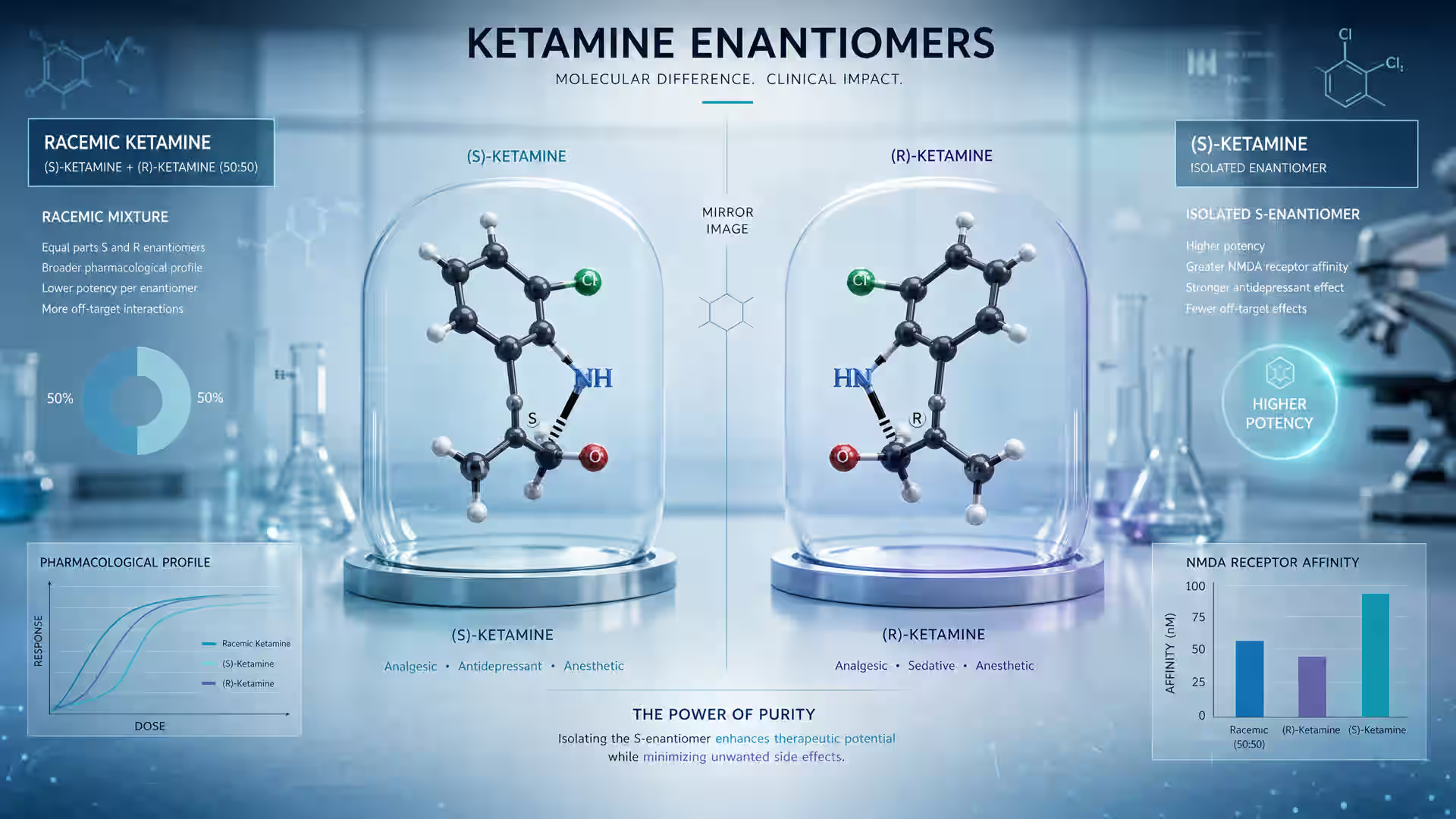
Executive Summary: Liquid Ketamine HCl maintains absolute molecular integrity for up to 36 months only when stored strictly between 20°C to 25°C (68°F to 77°F) and shielded entirely from light. Deviation triggers rapid photolytic and thermal degradation, altering active concentration vectors. For clinical precision and regulatory compliance, sourcing must bypass traditional logistics in favor of vacuum-sealed, climate-stabilized distribution networks validated with verifiable batch metrics.
Liquid Ketamine Hydrochloride (C13H16ClNO, CAS 1867-66-9) is widely recognized for its robust chemical structure under standard conditions. However, maintaining absolute laboratory-grade stability requires rigid adherence to specific environmental baselines. According to United States Pharmacopeia (USP) standards and official chemical evaluation profiles documented via the PubChem Molecular Database, unadulterated ketamine HCl solutions sustain a programmatic ketamine hcl shelf life of up to three years, provided they are kept within a controlled room temperature range. When working with subanesthetic concentration matrixes for research or long-term therapeutic asset management, identifying the precise triggers of compound degradation is paramount to preserving molecular accuracy and preventing empirical failures.
Potency degradation issues within medical and research frameworks rarely stem from the fundamental stability of the molecule itself, which features a highly resilient arylcyclohexylamine core. Instead, quantitative degradation is almost universally driven by external environmental catalysts: cumulative exposure to ultraviolet (UV) radiation, sub-optimal thermal environments, or micro-perforations in primary container seals that permit evaporation and atmospheric contamination. In academic, clinical, and veterinary environments, a breakdown in storage discipline can alter the active concentration ($mg/mL$) of solutions, leading to catastrophic dosage variations or analytical inaccuracies during testing sequences. Understanding exact vial degradation metrics prevents premature asset loss before administration.
To accurately audit the lifecycle of a liquid formulation, one must analyze the physical chemistry of the solution. Ketamine hydrochloride is a hydrophilic salt dissolved in a sterile aqueous vehicle, typically optimized with a localized pH ranging between 3.5 and 5.5. This mildly acidic range is calculated intentionally to maximize structural ionization and inhibit spontaneous chemical breakdowns. When exposed to environments outside these parameters, the delicate equilibrium between ionized and non-ionized states shifts, leaving the active ingredient highly vulnerable to irreversible chemical transformations.
Degradation Metrics and Temperature Sensitivity Factors
To preserve analytical reliability and avoid subanesthetic variances during clinical evaluations, operators must control for key chemical markers and establish clear subanesthetic temperature guidelines across their storage spaces:
- Photolytic Sensitivity: Direct exposure to ambient sunlight or high-intensity UV lamps catalyzes the breakdown of the parent molecule into secondary amine derivatives. This chemical shift reduces active assay percentages. Liquid solutions must systematically be housed in amber type-I glass vials or light-shielded secondary packaging. Over time, prolonged exposure to UV photons cleaves the structural bonds around the cyclohexanone ring, yielding specialized decomposition byproducts like 1-(2-chlorophenyl)epoxy-N-methylcyclobutanamine. This renders the solution useless for quantitative clinical application.
- Thermal Variance and Precipitation: Dropping below the lower threshold can cause the active salt to precipitate out of the sterile aqueous vehicle. While crystallized ketamine can be redissolved using controlled, uniform heating protocols, improper thermal recovery risks altering the localized volume-to-weight ratio, spoiling dosage metrics. Conversely, exposing the solution to sustained temperatures above 30°C increases kinetic molecular action, driving hydrolytic reactions that systematically strip away the N-methyl group and degrade the active concentration target.
- Evaporative Concentration Shifts: If a multi-dose vial diaphragm or seal is compromised, structural evaporation occurs. Because the water carrier evaporates at a lower threshold than the active chemical compound, the local concentration (mg/mL) increases deceptively, nullifying baseline research parameters. This phenomenon is especially critical in low-humidity clinical environments where micro-fissures in synthetic rubber stoppers go unnoticed by visual observation alone. Evaluators tracking vial degradation metrics look specifically at these microscopic seal failures.
Quantitative Threshold Tracking Matrix
The following technical data matrix summarizes the expected structural outcomes across varying environmental baselines over sustained storage durations, referencing international standards published by the World Health Organization:
| Storage Condition | Temperature Range | Permissible Timeline | Expected Molecular Integrity Impact |
|---|---|---|---|
| Deep Cryogenic Freeze | -20°C to -80°C | Not Advised | Severe precipitation risk; crystal formation compromises aqueous homogeneity. |
| Refrigerated Storage | 2°C to 8°C | 24 Months | Stable, but localized crystallization can occur if localized solute concentration is near saturation. |
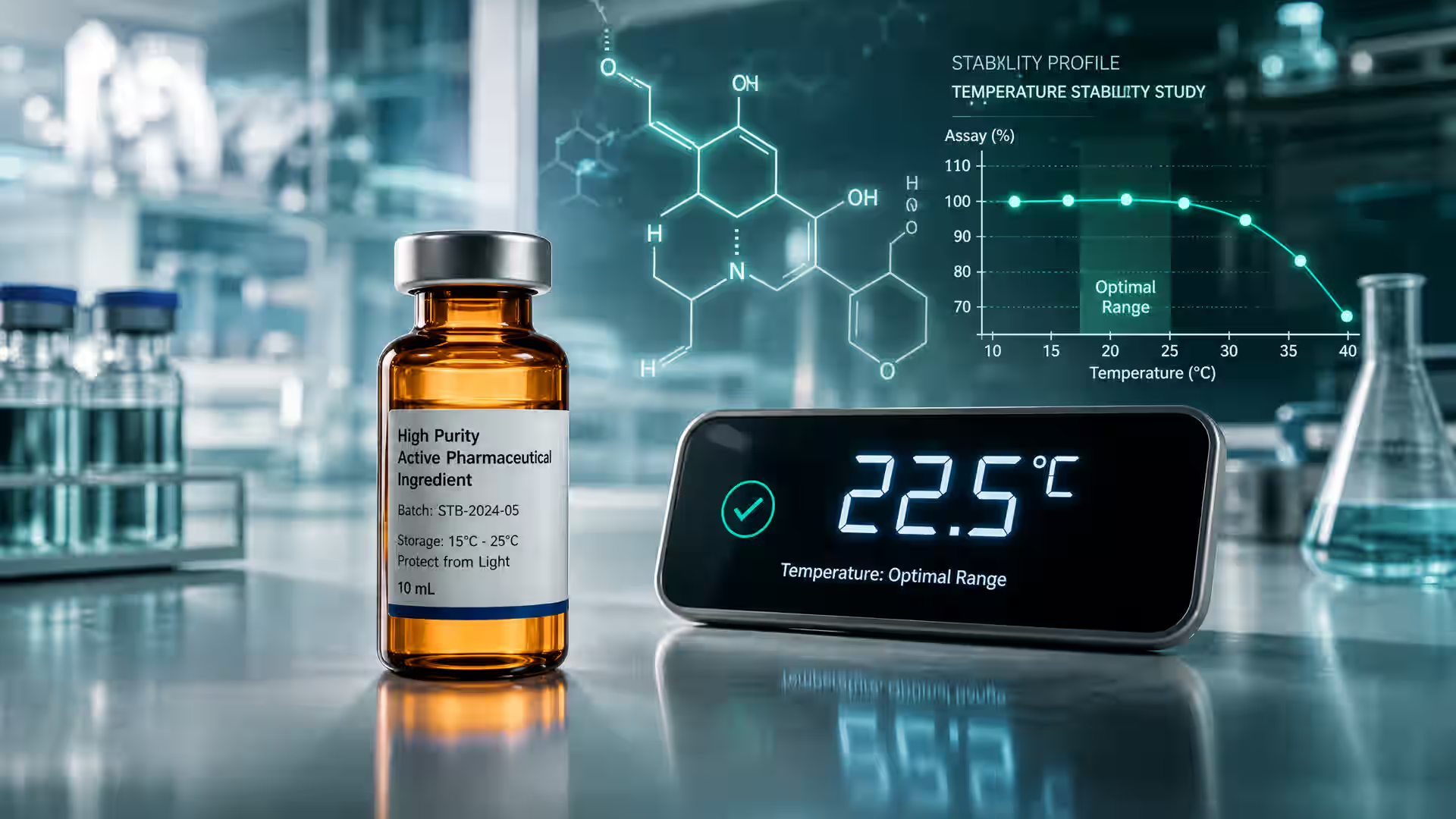
| Controlled Room Temp (USP) | 20°C to 25°C | 36 Months | Optimal thermodynamic state. Minimal to zero baseline breakdown (< 0.5% annual assay loss). Implements perfect subanesthetic temperature guidelines. |
| Elevated Thermal Exposure | 30°C to 40°C | < 60 Days | Accelerated hydrolysis; up to 5.2% alteration in active compound efficacy metrics. Ends optimal ketamine hcl shelf life. |
| Extreme Heat Spike | > 50°C | < 72 Hours | Rapid degradation; thermal decomposition of the amine structures. Discard required. |
🔒 Secure Worldwide Access to Verified Formulations
Because structural accuracy and clinical outcomes rely completely on unwavering molecular stability, sourcing strategy requires mitigating risk at every stage of custody. LyfeUnit eliminates standard distribution risks by delivering pure, laboratory-certified batches directly from climate-controlled manufacturing pipelines. If your protocol requires dry crystallization models, you can safely buy ketamine hcl in pure powder profiles to maintain long-term baseline storage alternatives.
To prevent environmental or atmospheric degradation during transit, our deployment logistics feature nitrogen-flushed, vacuum-sealed medical packaging that guarantees zero ultraviolet exposure and stable thermal baselines globally. To uphold operational discretion and full identity protection, transactions are processed exclusively through secure, decentralized blockchain networks. This end-to-end framework bypasses volatile cargo holds, uncertified customs warehouses, and broken cold-chains that routinely spoil standard institutional supplies.
Kinetic Decomposition Pathways: An Analytical Breakdown
To understand why the controlled room temperature threshold is so strictly mandated, researchers must explore the underlying thermodynamics of the molecule. The degradation rate can be modeled using the classical Arrhenius equation, which establishes the quantitative relationship between absolute temperature and the specific rate constant of a reaction:
$$k = A e^{-\frac{E_a}{RT}}$$
Where $k$ represents the degradation rate velocity, $A$ is the pre-exponential frequency factor, $E_a$ is the activation energy barrier for the breakdown path, $R$ is the universal gas constant, and $T$ is the absolute temperature in Kelvin. In a perfectly stabilized setting (20°C to 25°C), the available thermal kinetic energy within the liquid matrix is insufficient to routinely overcome the $E_a$ required for structural cleavage. However, when ambient temperatures elevate to 35°C or higher, the probability of molecules matching or exceeding the activation energy threshold scales exponentially.
Furthermore, because ketamine solutions are packed in an aqueous vehicle, the primary chemical pathway for non-photolytic decay is hydrolytic cleavage. This is accelerated when fluid containers are improperly stored or exposed to intense oxygen saturation. If the container seal becomes oxygen-permeable, the dissolved oxygen acts as an electron-withdrawing radical agent, initiating a cascading reaction that targets the vulnerable carbon links adjacent to the aromatic chlorine ring. This is why multi-dose vials used in clinical scenarios must be tracked via an exact puncture log to ensure structural integrity is never systematically compromised.
Clinical Protocols for Long-Term Integrity Maintenance
For research institutions, veterinary clinics, and professional entities managing inventory, the implementation of standard operating procedures (SOPs) is critical. Storage facilities must utilize continuous digital data loggers to track ambient temperature fluctuations. Any batch subjected to spikes exceeding 30°C must undergo quantitative thin-layer chromatography or high-performance liquid chromatography (HPLC) testing to verify that the active purity threshold remains uncompromised. If specialized clinical interventions require pre-packaged, authenticated formulations, utilizing Ketalar Ketamine HCl Injection USP 500mg 10ml variants guarantees standardized, manufacturer-sealed preservation lines.
To establish a flawless institutional chain of preservation, facilities should incorporate the following three-step operational handling framework:
- Automated Environmental Auditing: Situate NIST-traceable digital tracking instruments directly within your secure storage enclosures. Configure real-time alerts to detect instances where local variables stray outside the mandatory 20°C to 25°C baseline for longer than 4 continuous hours.
- Strategic Stock Rotation Protocols: Enforce strict First-In, First-Out (FIFO) mechanics. Cross-reference batch manufacturing dates against original high-resolution analytical laboratory certifications to guarantee units approaching their 36-month horizon are prioritized for immediate clinical utilization.
- Vial Extraction Hygiene: When withdrawing fluid from a multi-dose container, the entry must be conducted using a sterile, non-coring needle to preserve the self-sealing elasticity of the elastomeric stopper. A compromised stopper introduces ambient air loops, triggering the evaporative concentration shifts highlighted in our technical analysis.
By enforcing these foundational physical benchmarks, institutions eliminate variables that cause anomalous testing results, uneven patient sedation responses, or structural batch losses. True reliability demands complete control over environmental variables from the precise second the compound is synthesized at the factory line to the exact moment it is utilized in the field. If your laboratory layout is optimized for ready-to-use liquid protocols, you can directly choose to buy liquid ketamine formulations processed under strict nitrogen-blanketed environments to safeguard against early kinetic decay.